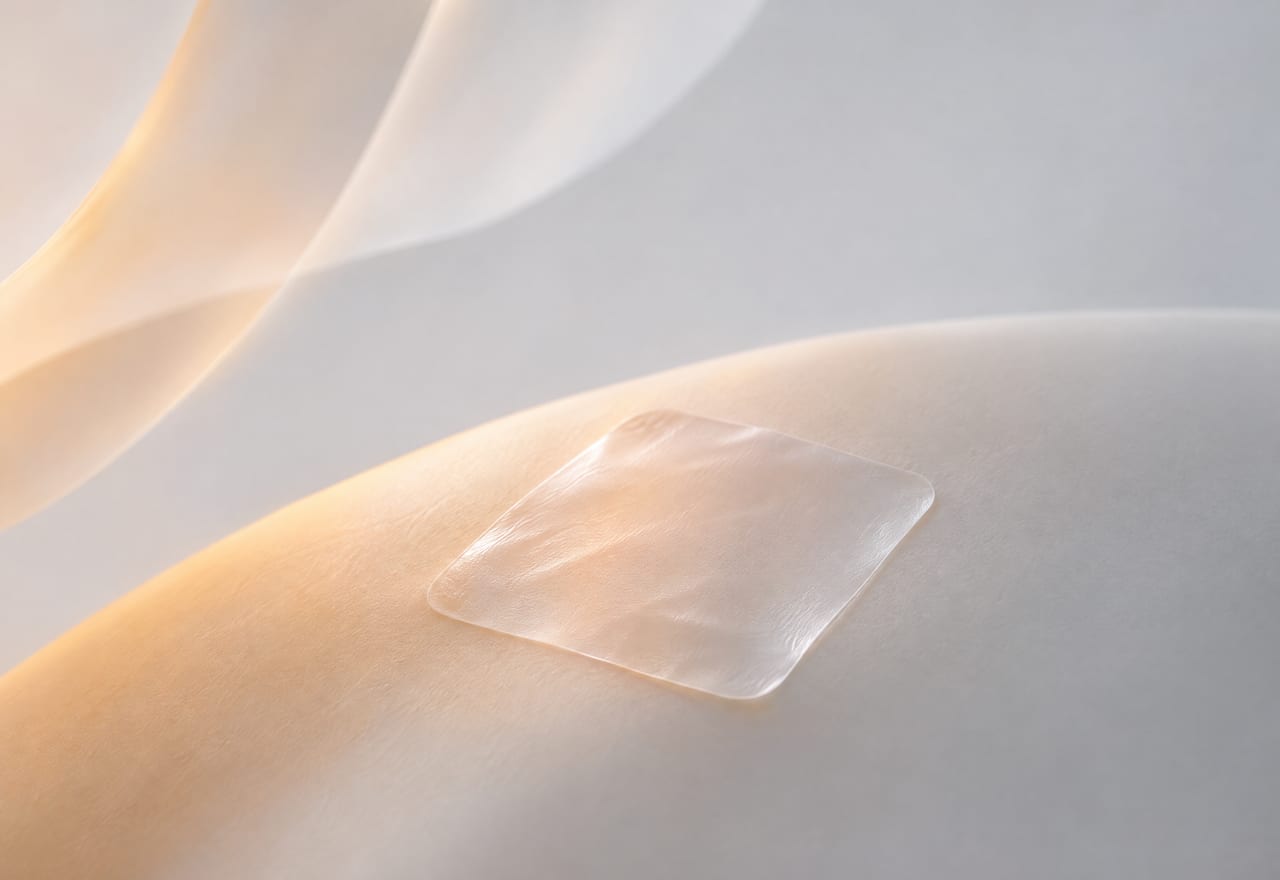
Wound & burn care
Micro-perforations turn the sheet into a capillary diode: exudate leaves the wound and cannot return, while the gentle face keeps removal painless.
fastest path to revenue
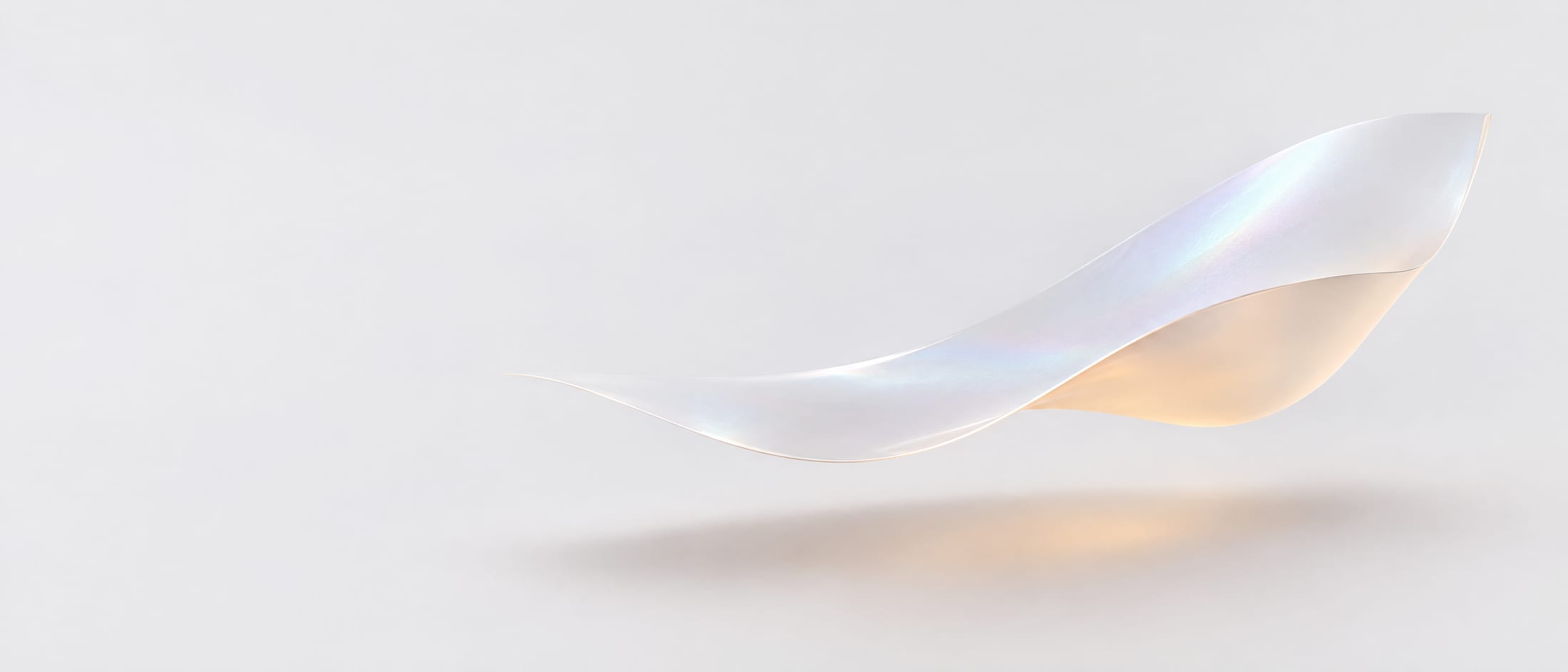
Unitary DPNR Janus membranes
Purified natural rubber, engineered so that its two faces behave like two different materials — without laminating anything together. There is no glue line, so there is nothing to peel apart.
The invention in one minute
Every rubber chain in natural latex carries two different chemical ends. We stopped treating that as a quirk and started using it as a manufacturing resource.
In Hevea brasiliensis latex, each cis-1,4-polyisoprene chain is heterotelechelic: a phospholipid group at one end, a peptide group at the other. Cast the latex between two deliberately mismatched boundaries and dry it slowly, and those ends sort themselves — lipid ends follow the drying front to one face, peptide ends gather at the other. Cure the film without vulcanization accelerators and the arrangement is locked in place, covalently, for good.
The result is a single continuous sheet with opposing surface chemistry. One face is lubricious, low-fouling and gentle against tissue. The other is polar and chemically addressable — it takes grafted coatings, bonded hydrogels, conductive traces and biological ligands. Between them sits the elastomer that does the stretching.
Because the asymmetry is grown rather than glued, it cannot delaminate, and because it is anchored to the polymer backbone rather than dip-coated on, it cannot wash off.
Figures are platform design targets and values recited in the patent specification. They are not independently verified; benchtop validation is the first milestone on the roadmap.
What makes it different
The conventional way to get opposing surfaces is to bond two films together. Every bond is a plane that can fail when the dressing gets wet and bends — which is exactly what a dressing is asked to do.
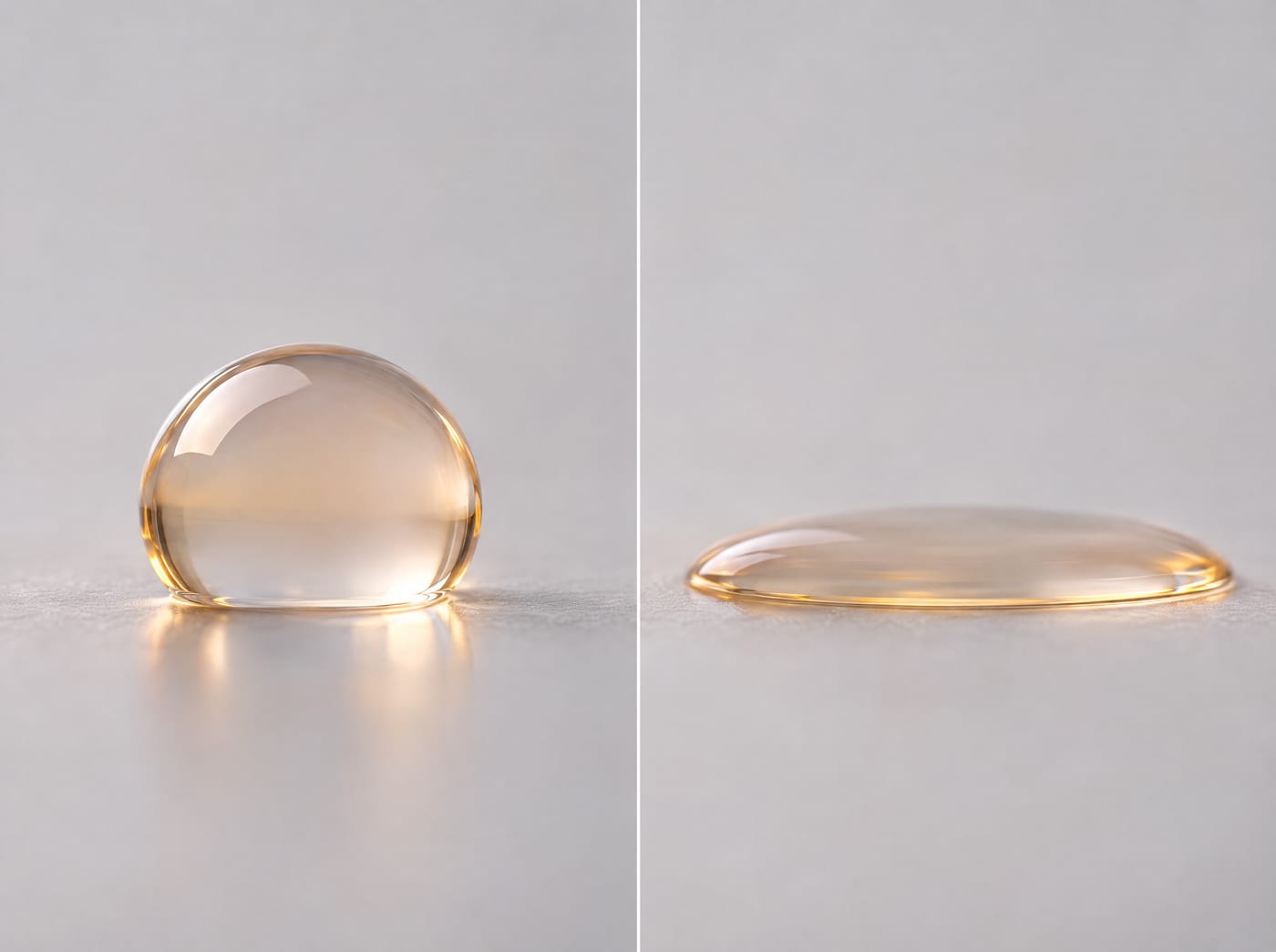
Lubricious and low-fouling. It does not grip granulating tissue, so removal is atraumatic, and proteins and cells are repelled rather than adsorbed.
The body of the sheet: compliance, tear resistance, high oxygen and carbon-dioxide permeability, and room to carry a drug payload.
Polar and chemically addressable, with amine, carboxyl, hydroxyl and thiol handles for grafted coatings, bonded hydrogels, conductive traces and biological ligands.
Start here
Natural rubber has been made into sheet, gloves and condoms for more than a century, and the recipe has barely changed. Understanding that recipe is the quickest way to see what is different about ours.
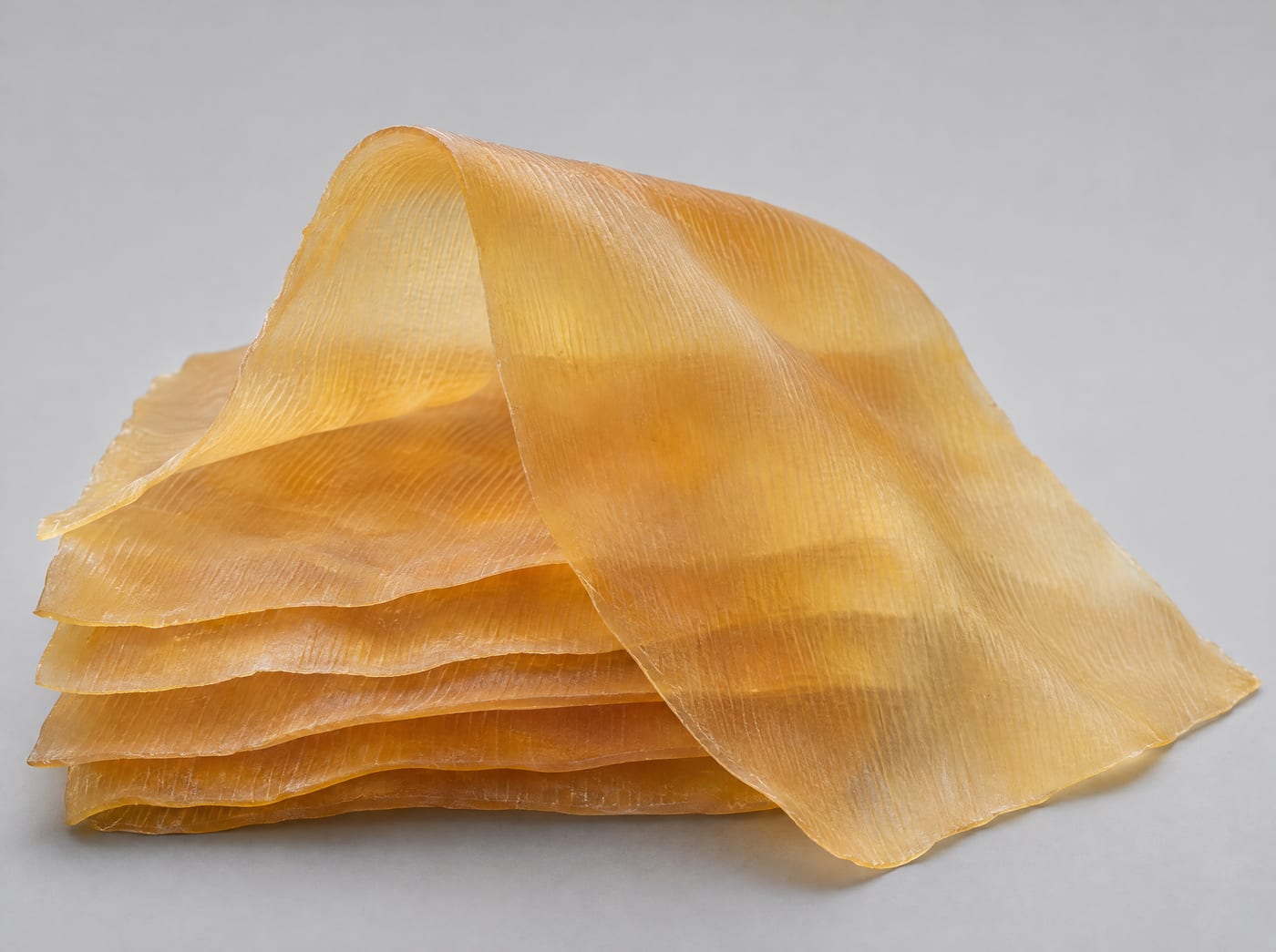
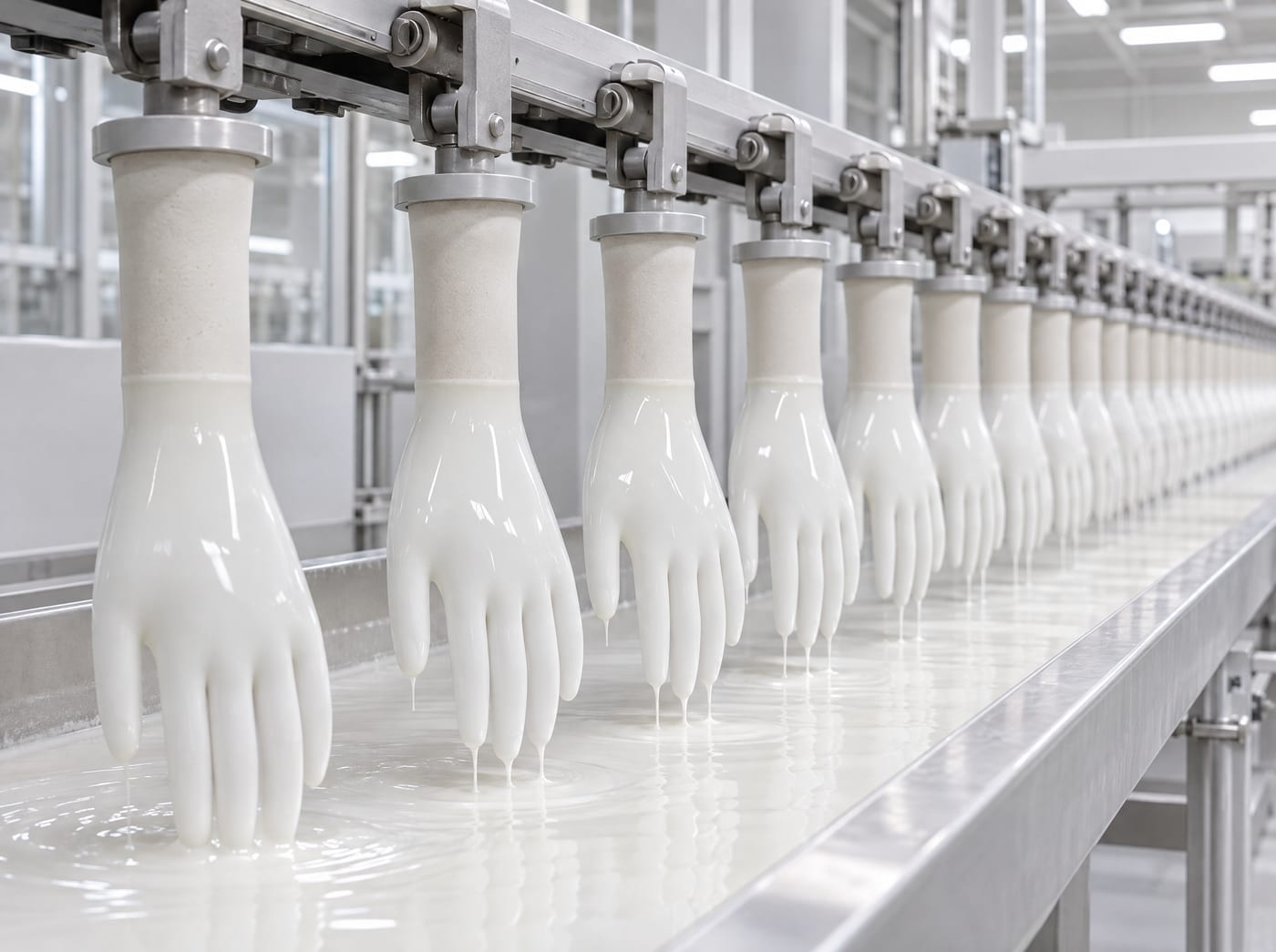
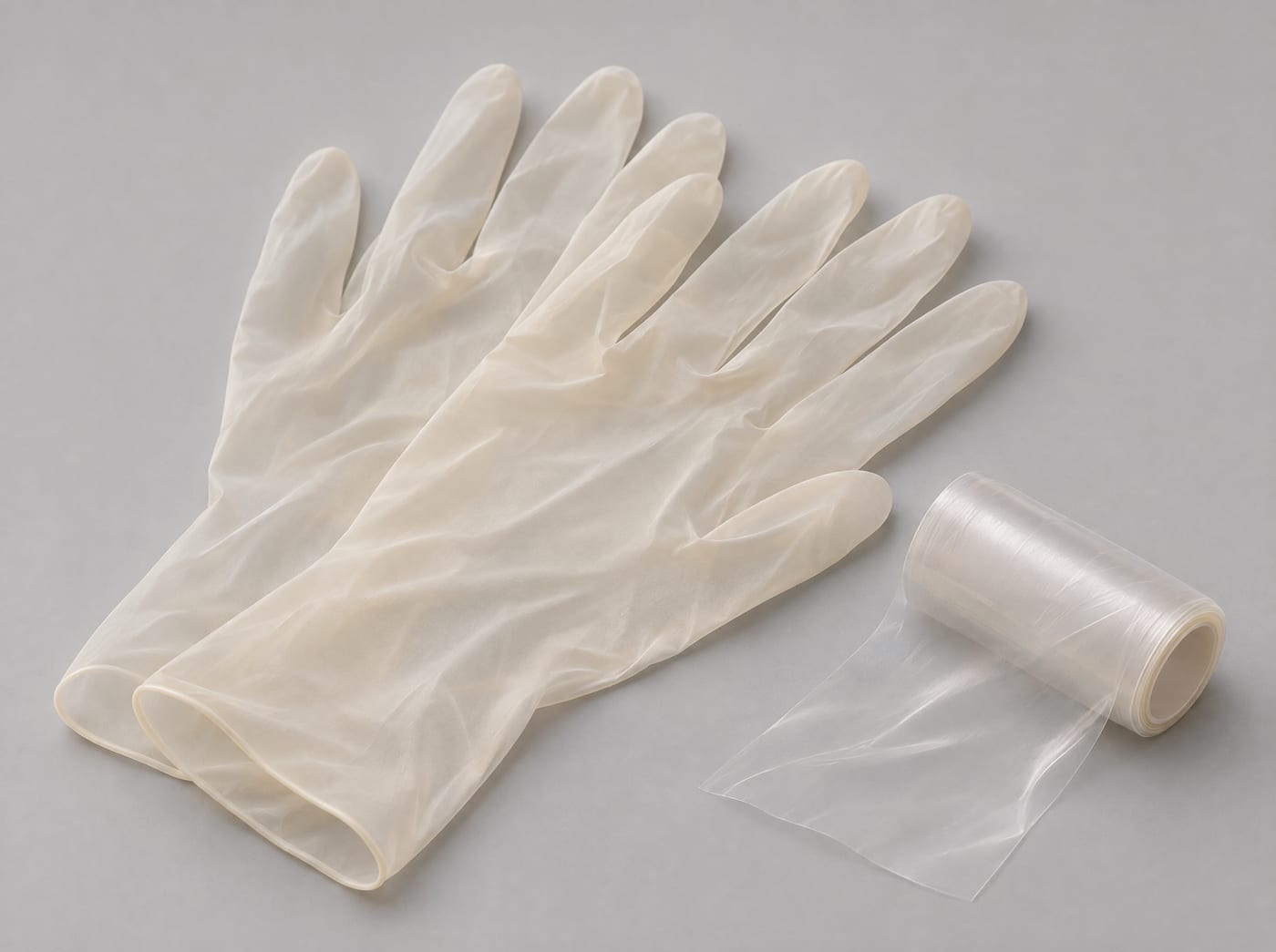
Latex is cut from the tree and collected as a milky dispersion of rubber particles in water.
Ammonia stops it coagulating; centrifuging raises the rubber content for dipping grades.
Sulfur, zinc oxide and accelerators are stirred in — uniformly, throughout the whole batch.
Dip a former, cast a sheet, or coagulate and roll. The film takes the shape of the mould.
Heat drives sulfur crosslinks through the film, turning soft rubber into a tough elastic solid.
Washing removes some residues. What leaves the line is one uniform material.
How it is made
The asymmetry comes from how the film is formed and cured, not from adding layers. That means no new factory — a conventional latex casting or dipping line runs this process with changes to the boundary conditions and the cure, not to the machinery.
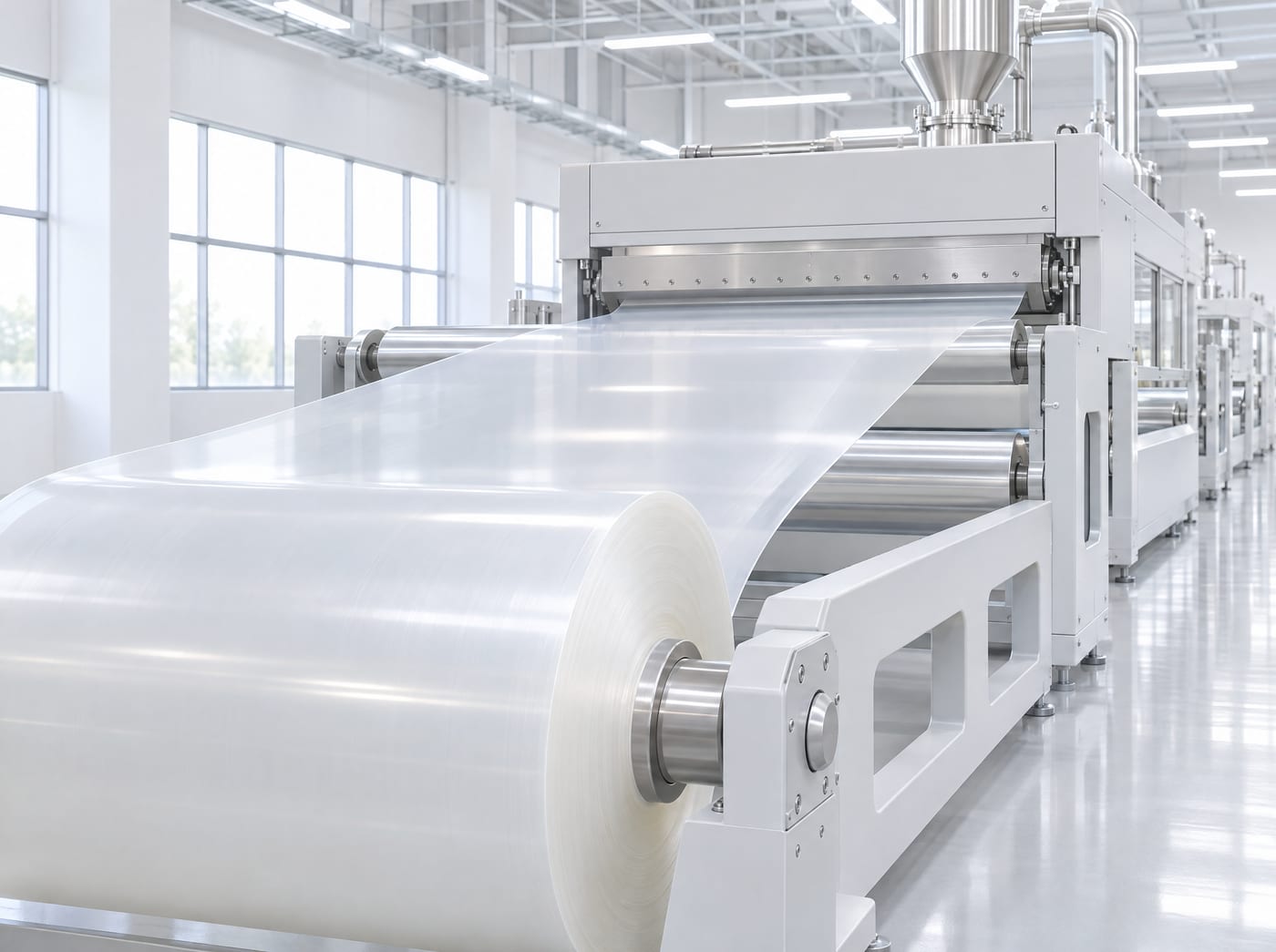
Alkaline buffering, creaming and diafiltration strip the soluble allergenic proteins while keeping the bound chain-end chemistry the process depends on.
A cosolvent swells the particle core and chilled, pulsed sonication brings particles down below 100 nm without gelling the dispersion or cutting chain length.
The dispersion is cast between two deliberately mismatched boundaries — one lipophilic, one polar — with an applied field or gradient driving the two chain ends apart.
Gentle, low-shear concentration removes water and cosolvent without boiling, so the sorted arrangement is not disturbed before it can be fixed.
Accelerator-free curing — electron beam, gamma or depth-graded UV — fixes the gradient covalently and sterilizes the film in the same pass. No thiurams, no dithiocarbamates, no Type IV sensitizers.
Where it goes
Each uses the same membrane and differs only in which face does the work.
Micro-perforations turn the sheet into a capillary diode: exudate leaves the wound and cannot return, while the gentle face keeps removal painless.
fastest path to revenue
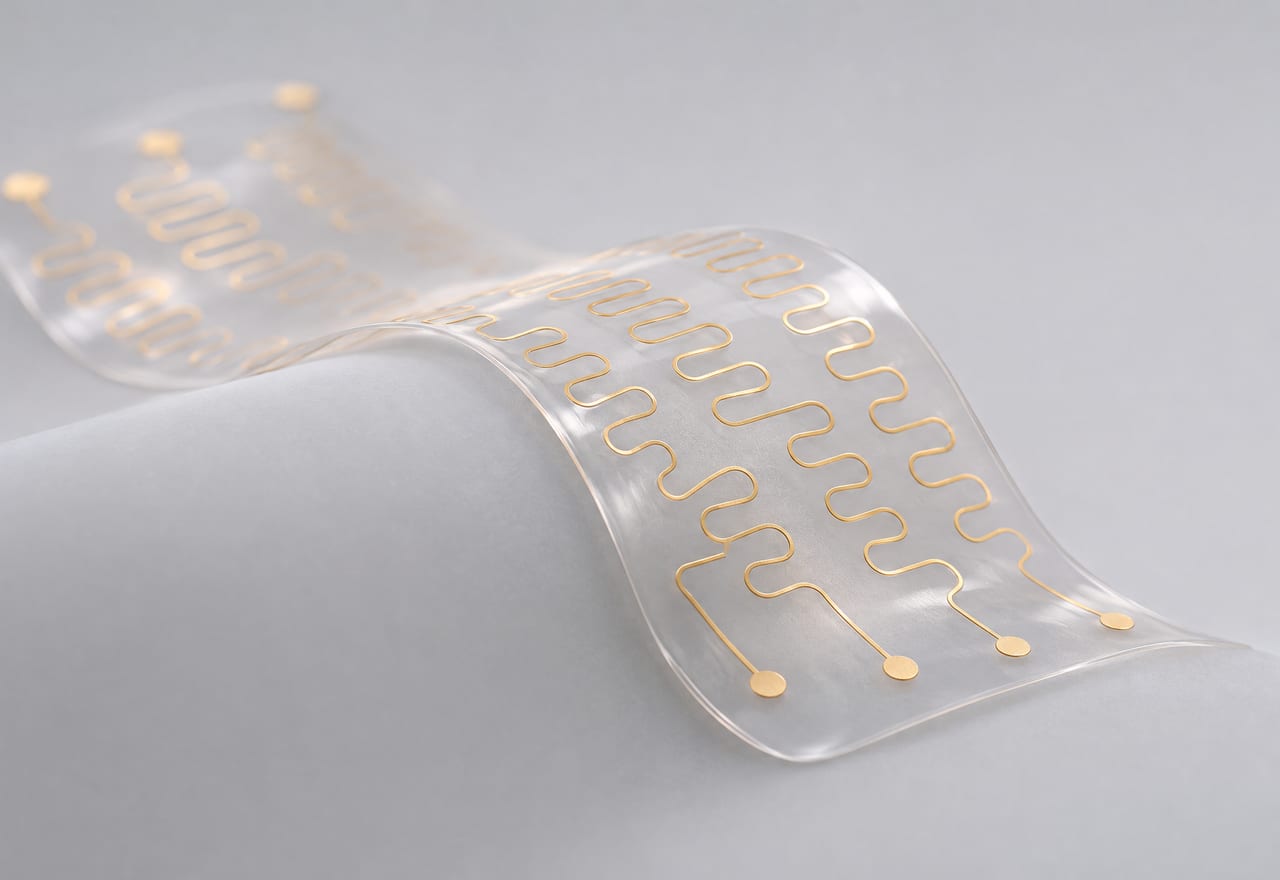
Conductive traces anchor to the working face while micro-windows expose the electrodes through the low-fouling face — compliance and conductivity without the usual trade-off.
≤ 10 µm, conforms to cortex
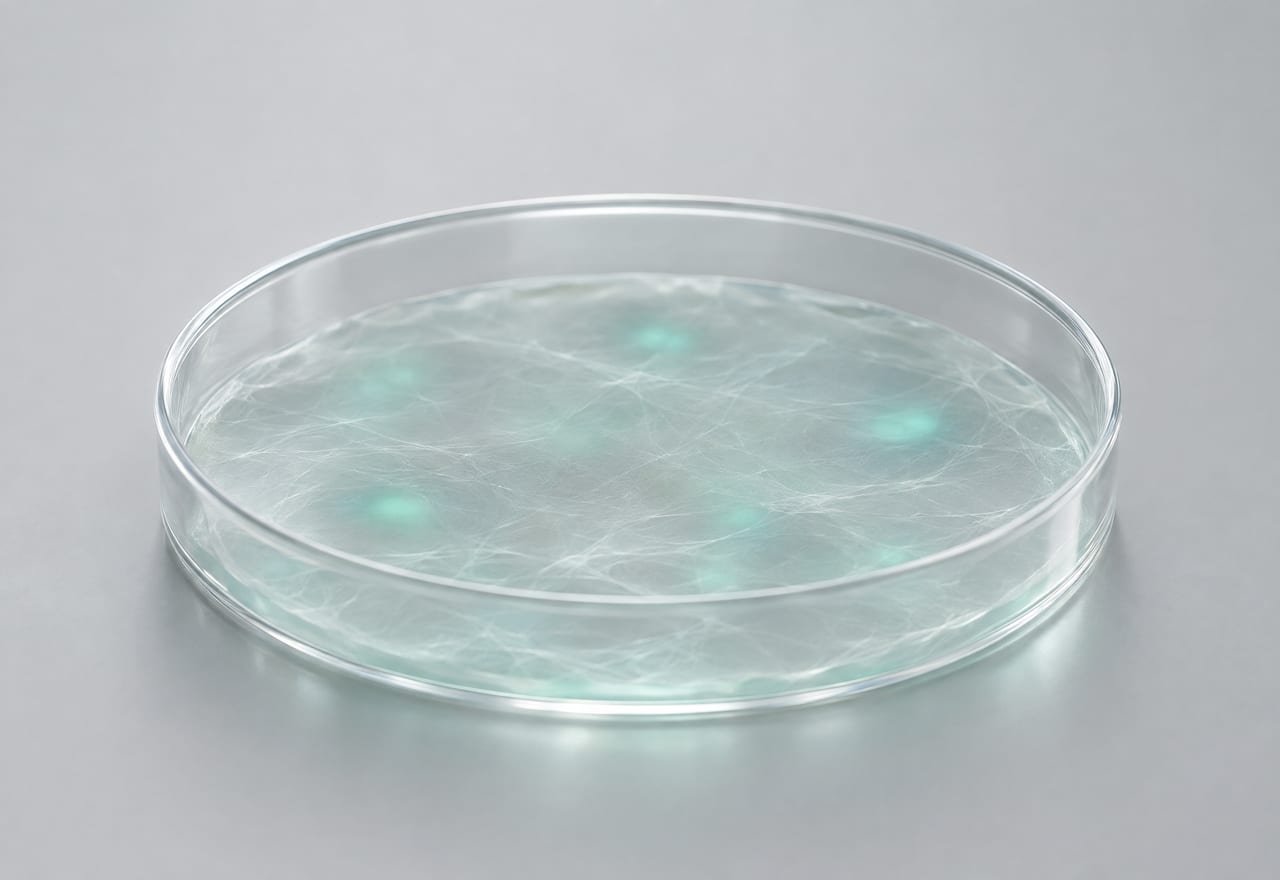
Gas-permeable under cyclic strain on the ligand face; inverted, the low-adhesion face releases spheroids and organoids intact, with no enzyme needed.
harvest by flexing, not trypsin
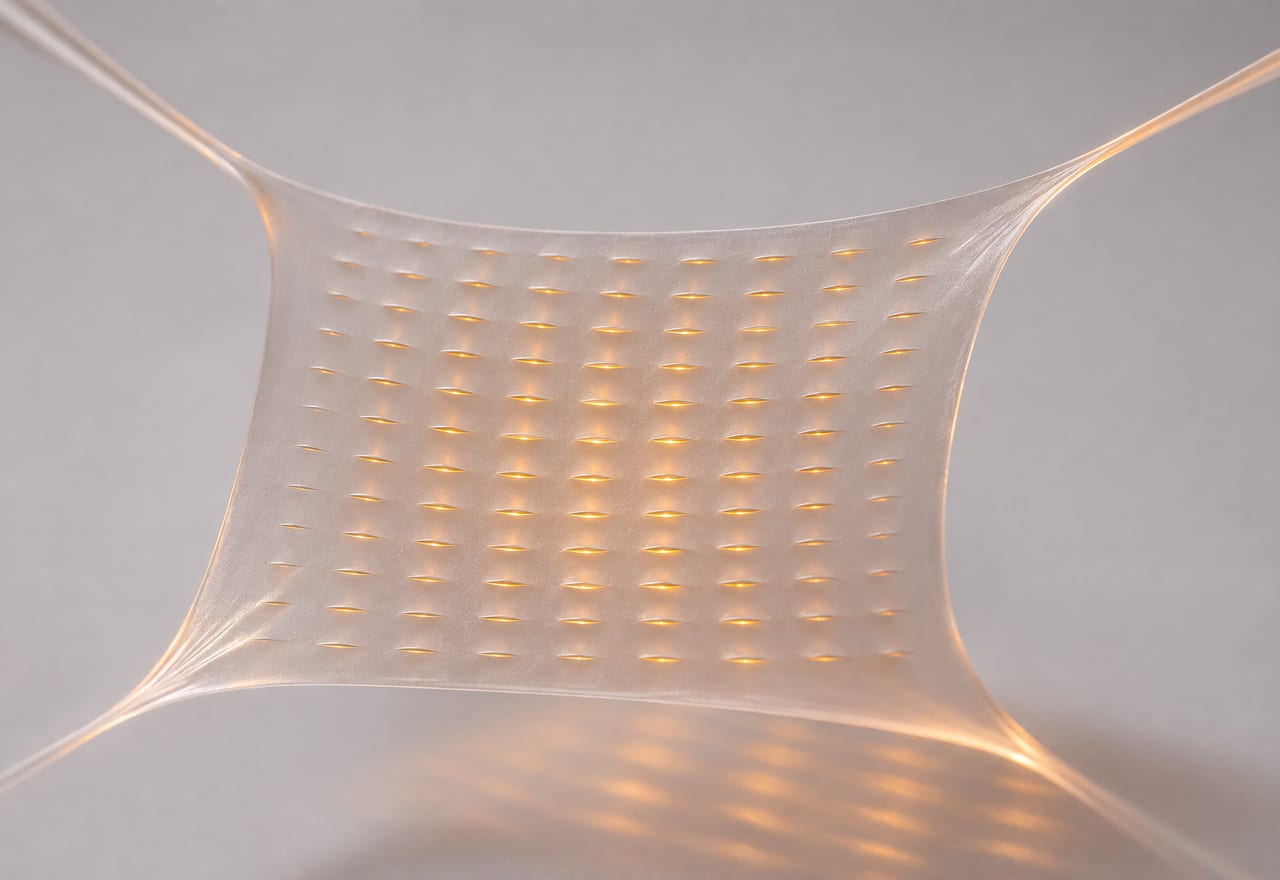
Micro-slits sit closed at rest and open under tissue or joint strain, so a dose arrives when the body moves and stops when it rests.
5.8× flux, open against closed
The investor briefing covers the market, the competitive position and the IP strategy. The technical walkthrough covers the specification itself — architecture, manufacture, worked examples and claims.